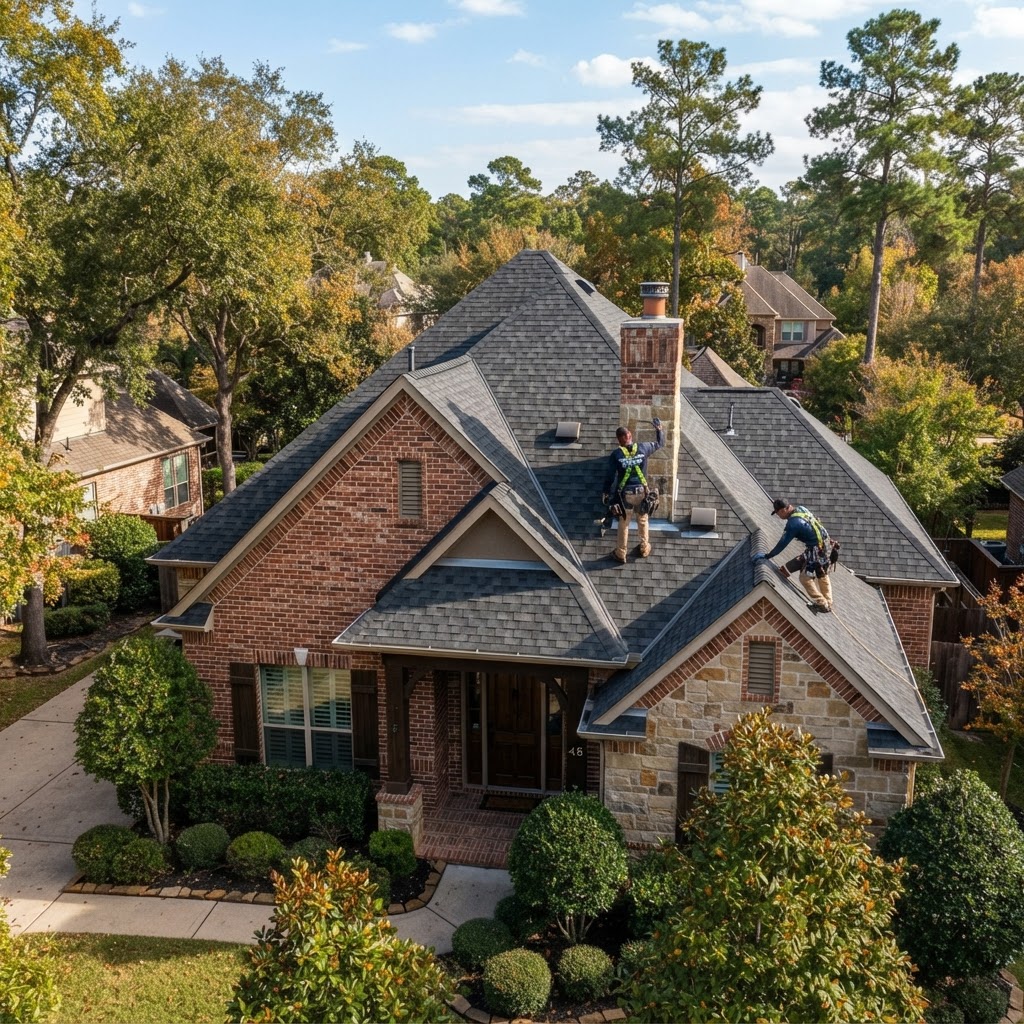
The Woodlands Homeowner's Seasonal Roof Checklist: What to Do Right Now Before Winter Pops Up
Most Woodlands homeowners don't think about their roof until water is coming through the ceiling. Here's a season-by-season, task-by-task checklist built specifically for our climate — with the stuff your contractor probably hasn't told you.
If you've lived in The Woodlands for more than two years, you already know the weather here doesn't follow rules. We got hammered by back-to-back hail events in spring 2024, watched Hurricane Beryl clip the region hard enough in July 2024 to leave thousands without power and roofs missing shingles, and then got a February freeze that reminded everyone why ice damming isn't just a Minnesota problem. Your roof takes all of that.
This checklist is organized by season and built for the specific conditions in Montgomery County and the Greater Woodlands area — not generic advice copy-pasted from a national roofing blog.
November–December: What to Do Right Now
This is the most underutilized inspection window of the year. The brutal UV season is behind you, and the serious cold hasn't settled in yet. If your roof has damage from the spring or summer storm seasons, now is the time to find it — before a cold front drives rain sideways through any compromised flashing.
What you can do yourself from the ground (no ladder required):
- Walk the perimeter of your home with binoculars on a dry, clear day. You're looking for missing granules (shingles look bald or patchy), lifted tab edges, or any shingles that appear wavy or buckled.
- Check your gutters. Excessive granule buildup in gutters isn't just normal wear — if you're pulling out handfuls of gray or black grit, your shingles are losing structural integrity. On a 20-year-old GAF Timberline HD roof, that's a sign you're in the final years.
- Look at your ridge cap. The cap shingles on the peak take more direct UV than any other part of the roof. Cracking or lifting there is a leading indicator of broader shingle health problems.
- Inspect attic ventilation from inside. Go up into your attic on a sunny day and look for any light penetrating from the deck — that means gaps. Also feel for excessive warmth even in November. The Woodlands sits in a high-humidity corridor, and attic moisture that never vents out breeds mold on OSB decking faster than most homeowners realize.
One thing most people don't know: In our area, foundation movement — especially in the Panther Creek and Sterling Ridge sections where older homes sit on expansive clay soils — can physically pull step flashing away from brick chimneys and sidewalls over time. This isn't a roofing defect. It's a Texas soil problem. But the leak it creates looks exactly like a roofing defect, and it's one of the most common sources of interior water damage we see in homes between 15 and 25 years old. Have someone check the flashing at every wall-to-roof transition.
January–February: Freeze Prep and Ice Dam Awareness
Yes, The Woodlands gets ice dams. Not every year — but URI in 2021 and the January 2024 freeze proved that when temperatures drop into the low teens and stay there, ice dams can form on roofs with inadequate attic insulation.
An ice dam forms when heat escaping from a poorly insulated attic melts snow or ice at the upper roof, which then refreezes at the cold eaves. That standing water backs up under shingles. GAF's WeatherWatch® leak barrier (a self-adhering underlayment) is specifically designed to protect eave edges from exactly this, but it only helps if it was installed during original construction or a re-roof.
Before a freeze event:
- If you don't know whether you have an ice and water shield at your eaves, check your original construction records or ask your roofer. Homes built before 2010 in this area often don't have it.
- Make sure your attic insulation is at R-38 or higher. This is the single most effective defense against ice dam formation — it keeps the attic cold so heat isn't escaping unevenly through the deck.
- Clear any debris from gutters before a freeze. Standing water in clogged gutters freezes and expands, pulling gutter brackets out of fascia boards and sometimes lifting the bottom course of shingles with it.
March–May: Hail Season Preparation
This is the most consequential window for Woodlands homeowners. The Gulf moisture that fuels spring thunderstorms combines with cold fronts dropping from the plains to produce some of the most intense hail corridors in the country. Montgomery County averages multiple significant hail events per year, and pop-up supercells can drop golf-ball-sized hail with almost no warning.
Before hail season:
- Document your roof's current condition. Take photos with timestamps from the ground. If you do get hit by hail, your insurance adjuster will try to argue pre-existing damage. Photos taken before the storm are your best counter-evidence.
- Know your policy's ACV vs. RCV status. Many homeowners in Texas have been quietly switched to Actual Cash Value (ACV) policies by carriers like State Farm, Allstate, and USAA — especially after the 2019–2021 claims surge. An ACV policy deducts depreciation, meaning a 15-year-old roof might get you $4,000 on a $22,000 replacement. An RCV policy pays replacement cost. Call your agent and ask directly.
- Consider impact-resistant shingles on your next replacement. GAF Timberline HDZ RS (Reinforced with StainGuard Plus) carries a Class 4 impact-resistance rating — the highest available. In Texas, Class 4 shingles can qualify you for insurance discounts of 15–28% depending on your carrier. That discount often offsets the cost premium of the upgrade over 7–10 years.
June–October: Hurricane Season and UV Damage Management
Hurricane season officially ends November 30, but the real Texas roofing threat from June through September is a combination of tropical systems and pure solar destruction. The Woodlands sees 60+ days per year above 95°F. Asphalt shingles sitting in that heat — especially on south- and west-facing slopes — absorb radiant heat that accelerates granule loss and shingle brittleness.
What to watch for mid-summer:
- Blistering: Small bubbles on shingle surfaces that pop and leave pockmarks. This can be confused with hail damage. It's actually caused by trapped manufacturing volatiles releasing under extreme heat, and it's more common on roofs with poor attic ventilation.
- Algae streaking: Those dark black streaks you see on roofs in Creekside Park and Cochran's Crossing are Gloeocapsa magma — a blue-green algae that thrives in our humidity. It's mostly cosmetic but accelerates granule loss. GAF's Timberline CS (with StainGuard Plus) has a 25-year algae resistance warranty and is worth specifying if you're doing a full replacement.
- After any named storm or tropical system, do a full ground-level inspection within 48 hours. Missing ridge cap shingles and lifted flashing are the two most common post-storm findings and both are easy to miss until rain finds the gap.
A Few Numbers Worth Knowing
- Full roof replacement in The Woodlands (2,500 sq ft, GAF Timberline HDZ, standard tear-off): $14,000–$22,000 depending on pitch, complexity, and current material costs
- Flashing repair at chimney or skylight: $350–$900
- Ridge cap replacement (full run): $600–$1,400
- Attic ventilation upgrade (add ridge vent + soffit baffles): $800–$1,800
These aren't quotes — they're real ranges based on current material and labor costs in the Houston market as of late 2026. Get at least two itemized bids before committing to anything.
Your Next Step
If your roof is more than 12 years old and you haven't had a professional inspection since your last insurance claim, schedule one before the holiday season locks up contractor calendars. A good inspection takes 45 minutes and costs nothing from a reputable company. FairClaims Roofing & Construction offers free inspections for Woodlands homeowners and will give you a written condition report — not just a sales pitch. RCAT #03-0999.
Even if you don't call us, get someone up there. The best time to find a problem is before it becomes a ceiling stain.
Need a roof inspection?
FairClaims Roofing & Construction offers free inspections across the Texas Triangle.
Click to Call