The Conroe Homeowner's Seasonal Roof Checklist: What to Inspect, Fix, and Document Before the Next Storm Hits
Most Conroe homeowners don't think about their roof until water is dripping onto the kitchen floor. This expert-level seasonal checklist — built from 20+ years of climbing roofs across Montgomery County — tells you exactly what to look for, when to look for it, and what you can safely do yourself before the next pop-up hailstorm or Gulf hurricane remnant rolls through.
Most Conroe homeowners don't think about their roof until water is dripping onto the kitchen floor. By then, what could have been a $400 repair is a $12,000 insurance claim — or worse, a denied claim because the damage is deemed "pre-existing."
After inspecting thousands of roofs across Montgomery County, I can tell you this: the homes that stay dry and keep insurance claims clean are almost never the ones with the newest roofs. They're the ones with owners who do a quick, informed walk-around four times a year. This checklist is built for that homeowner.
Conroe sits in a particularly brutal weather corridor. You're north of Houston, which means Gulf moisture pumps into Montgomery County almost year-round, but you're also close enough to the I-45 hail belt that spring pop-up storms can drop golf-ball-size hail with almost no radar warning. Add the freeze events — February 2021 (Uri), December 2022 (Elliott) — and the UV punishment from triple-digit summers, and your roof is genuinely working harder than most people realize.
Here's how to inspect it intelligently, season by season.
Spring (March–May): Post-Hail-Season Eyes On Everything
Spring is the most important inspection window for Conroe homeowners. The North Houston hail season typically runs February through May, and Montgomery County gets hit multiple times in a bad year. After any storm where hail is confirmed — even pea-sized — do the following:
From the ground (binoculars help):
- Look for bruised or dented shingles. On asphalt shingles like GAF Timberline HDZ or Owens Corning Duration, hail impacts knock off the granules and leave a dark, soft spot that looks slightly "dinged in." This is distinct from normal weathering.
- Check your gutters and downspouts. After a hail event, you should see granule accumulation at the bottom of your downspouts. A small amount is normal. A literal pile of granules is a red flag — your shingles are losing protective mass.
- Look at your AC condenser fins, window screens, and painted wood trim. If those are dented or pocked, your roof likely is too. This matters enormously if you file an insurance claim — adjusters call this "collateral damage" and it corroborates your roof damage.
From your attic (yes, go up there):
- In early morning, look for any pinpricks of light. Daylight in the attic means a breach in the decking or ridge.
- Feel the underside of the roof deck along the eaves. Soft, spongy plywood decking is a sign of long-term moisture intrusion — often caused by ice damming from freeze events or failed flashing.
What you can do yourself: Clear gutters of debris and granule buildup. Photograph any visible damage immediately after a storm — date-stamped photos are powerful documentation if you file a claim within the 12-month window most Texas carriers require.
Summer (June–August): UV, Attic Heat, and Hurricane Season Prep
Conroe summers are brutal, and not just for the people outside. Surface temperatures on a dark asphalt shingle in July can exceed 160°F. Over time, this thermal cycling causes shingles to crack, cup, and lose adhesion along the seal strip — that's the factory-applied adhesive bead that bonds overlapping shingles together and keeps them from lifting in wind.
What to check:
- Walk your roofline and look for any shingles that are curling at the edges or cupping upward at the center. These shingles are near end-of-life and will fail in the next significant windstorm.
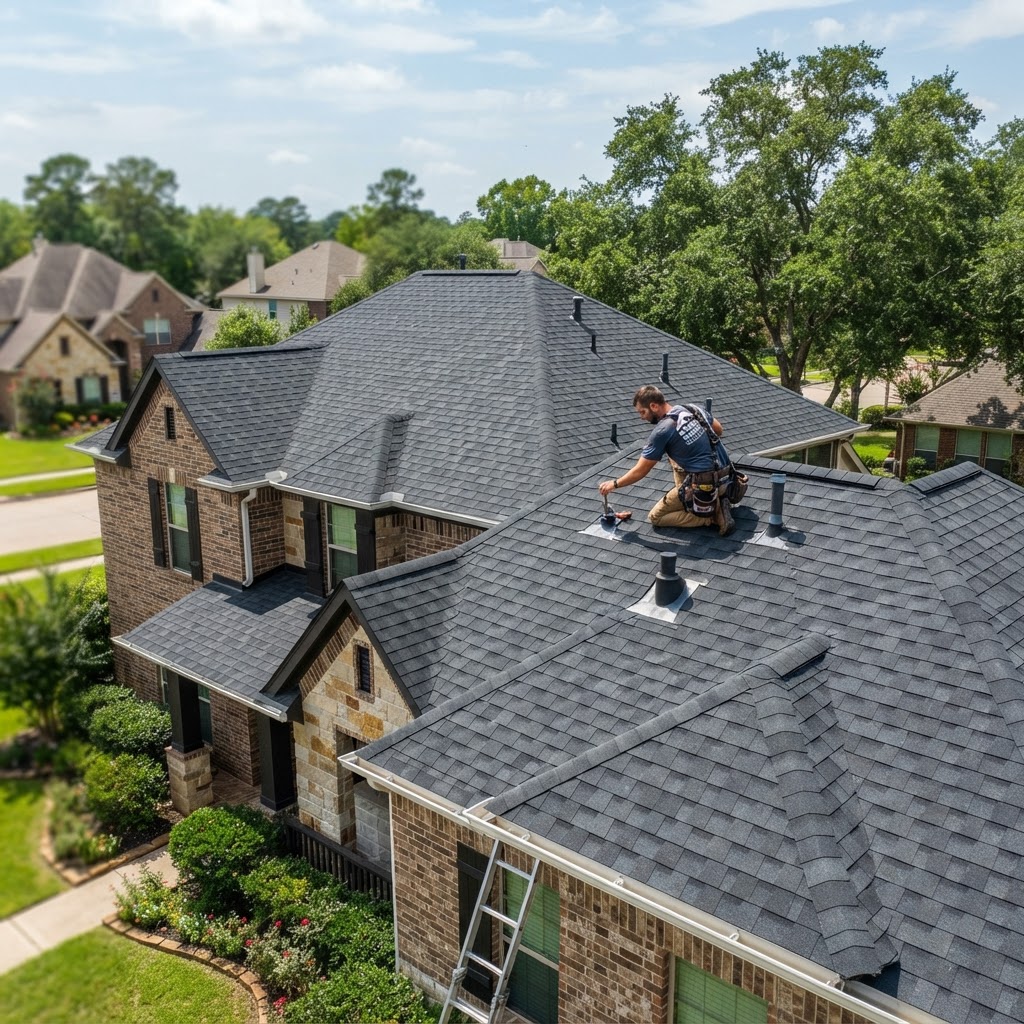
- Inspect every pipe boot (those rubber collars around plumbing vents). Conroe's UV exposure degrades neoprene pipe boots in as little as 7–10 years. A cracked boot is one of the most common causes of slow, hidden leaks that rot decking before you ever see interior water stains.
- Check your ridge cap shingles. These take twice the UV exposure of your field shingles. On older roofs, you'll often see the ridge cap lifting or losing granules while the field shingles still look passable.
Hurricane prep (June 1 – November 30): Conroe doesn't get direct landfalls, but remnants from Gulf storms regularly deliver sustained 50–70 mph winds to Montgomery County. Hurricane Harvey (2017) dumped 50+ inches of rain on the region and exposed every existing flashing failure in the area.
- Inspect all flashing: chimney, skylight, wall step-flashing, and valley metal. These are the junctions where water gets in when the caulk fails or the metal separates due to foundation movement. In Conroe's clay-heavy soils, homes shift seasonally — and that movement telegraphs directly to your flashing joints.
- Make sure your attic has adequate ventilation. A properly ventilated attic (typically 1 sq ft of vent per 150 sq ft of attic floor) reduces heat buildup that accelerates shingle aging. Check that soffit vents aren't blocked by insulation — this is extremely common in older Conroe subdivisions.
What you can do yourself: Replace cracked pipe boots with an EPDM replacement boot ($15–$40 at a roofing supply house — not a big box store). This is a legitimate DIY repair if you're comfortable on a ladder. Apply Henry 208R elastomeric roof coating to exposed flashing caulk as a temporary moisture barrier.
Fall (September–November): Post-Storm Assessment and Pre-Winter Prep
Fall is your reset window. Hurricane season winds down, temps drop, and this is your best opportunity to get a professional up on the roof before winter without fighting the spring/summer scheduling crunch.
What to check:
- Clear all valleys of leaf and debris accumulation. Debris dams water, and standing water in a valley destroys even quality metal flashing over time.
- Inspect drip edge along your eaves. In Montgomery County's humidity, improper or missing drip edge leads to fascia rot that spreads under your shingle line invisibly.
- Check the attic for signs of mold or dark staining on the rafters. Conroe's humidity — regularly 85–95% in September — means any small moisture pathway becomes a mold factory inside an under-ventilated attic.
Insurance documentation tip: Fall is the right time to review your carrier's claim filing window. State Farm, Allstate, and USAA all have different timelines for storm-related claims in Texas, but most require filing within 1 year of the storm date. If you suspect you have unaddressed hail damage from spring, get a professional assessment before that window closes.
Winter (December–February): Freeze-Event Response
Uri and Elliott taught Montgomery County homeowners a hard lesson: even Conroe roofs aren't immune to ice damage. Ice dams form when attic heat escapes unevenly, melts roof snow or ice, and refreezes at the cold eave overhang — forcing water backward under shingles.
After a hard freeze:
- Check your attic insulation levels. The IRC recommends R-38 minimum in this climate zone (Zone 2); many older Conroe homes have R-19 or less. This isn't just an energy issue — it's a roof longevity issue.
- Look for lifted or cracked shingles along the eave line. Freeze-thaw cycling is hard on the adhesive seal strip.
- Inspect interior ceilings in corner rooms and near exterior walls for new water staining after the thaw.
What you can do yourself: Install a roof rake (an aluminum tool on an extension pole) to pull snow load off low-slope sections without going on the roof. Never use a standard metal rake — it tears shingles.
The One Thing That Surprises Most Homeowners
Here's what most people don't know until it costs them: insurance adjusters are not roofing experts. They're trained to assess claims efficiently, not to find every hail hit on a 2,800-square-foot hip roof. I've stood next to adjusters who missed 40% of the impacted field area because they didn't know what to look for on a particular shingle profile.
This is why your own photo documentation — timestamped, geotagged, taken within 24–48 hours of a storm — is genuinely valuable. It's not about being litigious. It's about having evidence when the adjuster's initial estimate comes in $8,000 below what the actual repair requires.
One Clear Next Step
If you've read this checklist and realized you haven't been up in your attic since you moved in — or you're not sure whether your spring hail left actual damage — schedule a free, no-obligation roof assessment. The team at FairClaims Roofing & Construction serves Conroe and all of Montgomery County, and as a GAF Master Elite® certified contractor, we can give you an honest assessment and document what we find whether you end up hiring us or not.
Start with your gutters this weekend. Bring a flashlight to the attic. Take photos after the next storm. The homeowners who stay ahead of their roof are the ones who never have to have the hard conversation with their insurance company about what they missed.
Need a roof inspection?
FairClaims Roofing & Construction offers free inspections across the Texas Triangle.
Click to Call