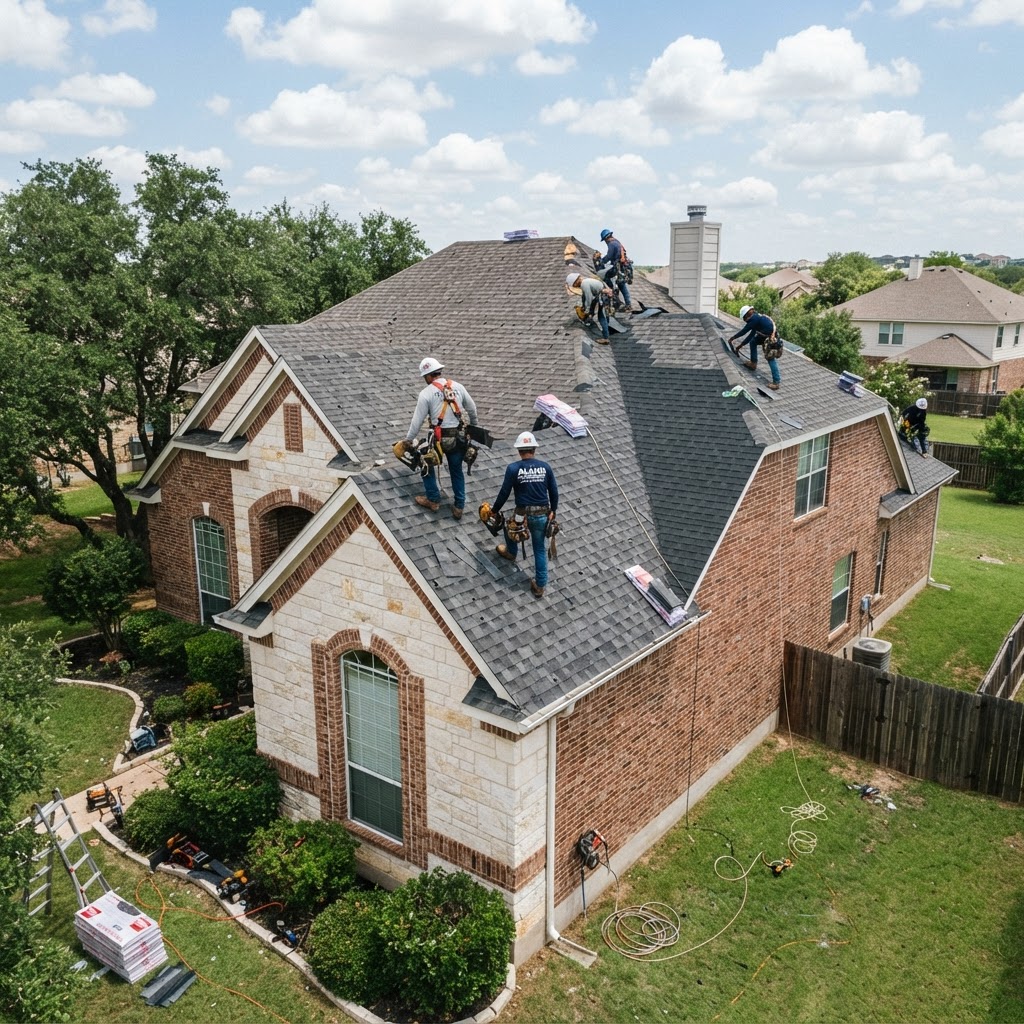
The 48-Hour Playbook: What Actually Happens to Your San Antonio Roof After a Hail Storm
A hail cell rolled through your neighborhood last night. Now what? Follow a real contractor's step-by-step breakdown of what to inspect, what to document, what your insurer is hoping you don't notice — and how to protect yourself before the window closes.
It's 2 a.m. and you're lying awake listening to what sounds like gravel being thrown at your house. By morning, the skies are clear, the streets are dry, and your neighbor is already on the phone with a roofer. You walk outside, look up, and honestly? You can't see anything obviously wrong.
That scenario plays out dozens of times every spring and fall in San Antonio. The Hill Country corridor — from New Braunfels up through Boerne and into the 78249 and 78230 zip codes — sits in one of the most active hail corridors in Texas. The National Weather Service San Antonio office has logged measurable hail events in Bexar County every single year for the past two decades. Some years, like 2016 and 2021, multiple storm cells produced golf-ball-to-baseball-sized hail across the same subdivisions within weeks of each other.
Here's what 20-plus years on Texas roofs has taught us about what to do — and critically, what not to do — in the 48 hours after one of those storms hits your home.
Hour 0–6: Don't Get on the Roof Yourself
Seriously. We know you want to look. But here's something most homeowners don't realize: a wet roof after a Texas storm is coated in a thin film of algae and micro-debris that makes it extraordinarily slippery. Every year we hear about homeowners who fall while trying to inspect damage that a professional would have found anyway.
Instead, do this from the ground:
- Check your gutters and downspout splash guards. Hail knocks granules loose from asphalt shingles. If your downspouts are discharging dark, sandy material into the gutter splash blocks, that's your first physical signal that something happened up top.
- Inspect soft metals. Walk around and look at your AC condenser caps, any exposed copper pipe boots, your mailbox, the aluminum flashing around any skylights, and — if you can see them — ridge cap vents. Hail leaves circular dings ("spatter marks") in soft aluminum that are nearly impossible to fake and easy to photograph.
- Check window screens and screens on porch enclosures. Torn or peppered screen fabric is excellent corroborating evidence for an insurance claim.
- Photograph the date-stamped weather alert on your phone alongside your house. This establishes storm timing before you make a single call.
Hour 6–24: File the Claim Before You Call a Contractor
This is where most San Antonio homeowners make their first mistake. They call a roofer first, get excited by what the roofer finds, and then call their insurance company. Here's why that order creates problems:
Some insurers — and State Farm, Allstate, and USAA all have local claims adjusters well-familiar with this pattern — will note on the file that the policyholder had a contractor present before filing. This doesn't automatically hurt you, but it can complicate the adjuster's narrative around "pre-existing damage" versus storm damage if there's any ambiguity.
Call your insurer first. Get a claim number. Ask specifically: "What is my claim number, who is the assigned adjuster, and what is the inspection turnaround time you're committing to?" Write that down. Texas Department of Insurance regulations require carriers to acknowledge a claim within 15 days and accept or deny within 15 business days after receiving all required documentation. Knowing this puts you in a better negotiating position if timelines start to slip.
The Inspection: What a Real Damage Assessment Looks Like
A thorough hail inspection is not someone standing at the edge of your roof taking one photo. Here's what a legitimate, GAF-certified inspection covers:
Field shingles: We're looking for bruising — that soft, spongy depression in the shingle mat that doesn't have the same resilience as undamaged areas. On GAF Timberline HDZ or Timberline CS shingles (common on homes built or re-roofed in San Antonio from 2015 onward), a valid hail hit removes granules down to the fiberglass mat, leaving a visibly lighter, sometimes shiny spot. We use a chalk grid — typically 10-foot squares on each roof slope — to count impacts per square foot. Insurance adjusters use the same method, so having your own documented count matters.
Flashing and pipe boots: This is the part adjusters frequently undervalue. San Antonio's expansive clay soils cause foundation movement that already stresses step flashing at dormers and chimneys. Add a hail impact to already-compromised flashing, and you've got a leak vector that won't show up until the next hard rain — sometimes months later. A competent inspector documents flashing condition separately.
Ridge cap and hip cap: These elevated surfaces take hail impacts at a steeper angle. Damage here is often more severe than on the main field and is frequently overlooked by desk adjusters reviewing photos taken from the ground.
Attic inspection: Here's an insight that surprises most homeowners: we always recommend an attic inspection after a significant hail event — not because hail penetrates immediately, but because the vibration from large hail can dislodge attic insulation baffles and disrupt ridge vent foam strips. San Antonio's August heat (regularly 98–104°F) and humidity make attic ventilation critical. A disrupted ventilation system quietly degrades your sheathing from the inside over the following months.
What Happens at the Adjuster Appointment
Request to be home. Have your contractor present if at all possible. This isn't adversarial — it's just practical. Adjusters carry a lot of properties on their list and are often on a tight schedule. Having someone who can walk the slope with them, point to marked impact locations, and reference the NOAA storm report (which any licensed contractor can pull for your specific address) keeps the inspection from being rushed.
If the adjuster's scope of loss comes back significantly lower than your contractor's estimate, you have the right under Texas law to invoke the appraisal clause in your homeowner's policy. This brings in a neutral umpire. Many homeowners don't know this exists. Read Section I of your policy — it's in there.
The Material Decision: Don't Default to "Match What Was There"
If your roof is more than 12 years old and you're in a San Antonio subdivision, there's a reasonable chance your original shingles were a 25-year three-tab product — potentially already degraded by UV exposure in the intense South Texas sun. A storm claim is the right moment to upgrade.
GAF Timberline HDZ shingles with StainGuard Plus™ algae protection are a meaningful upgrade for the Hill Country climate — the AlgaeBarrier technology specifically addresses the black streaking (Gloeocapsa magma algae) that discolors roofs in humid Texas summers. Pair them with a GAF WeatherWatch® leak barrier in the first two courses and valleys, and you have a system designed for both the freeze events San Antonio has experienced (February 2021 being the most recent severe example) and the UV intensity of a 100-degree August.
Ask your contractor what warranty covers your specific install — not just the shingle, but the full system. A GAF Master Elite® contractor can offer the Golden Pledge® Limited Warranty, which covers both materials and workmanship for up to 25 years. That's not a sales pitch; it's a meaningful difference when the next storm rolls through.
Before You Sign Anything
There is no shortage of out-of-state storm chasers who descend on San Antonio after every major hail event. They often offer to "work with your insurance" in ways that may involve inflated claims or assignment of benefits language that transfers your rights to the contractor. Texas outlawed AOB for homeowner property insurance claims in 2023 — but some contracts still include similar language under different terms. Read before you sign.
Work with a RCAT-licensed Texas roofing contractor. It's not optional — it's state law for residential re-roofing. License numbers are searchable on the RCAT website.
If you're not sure what you're looking at after a storm, or your insurer's adjuster appointment is coming up and you want a documented second opinion, the team at FairClaims Roofing & Construction offers no-obligation storm assessments for San Antonio homeowners. We'll tell you honestly what we find — including if we don't find significant damage. Schedule your inspection at fairclaims.com or call us directly. No high-pressure sales process, just a straight answer from someone who's been on a lot of Texas roofs.
Need a roof inspection?
FairClaims Roofing & Construction offers free inspections across the Texas Triangle.
Click to Call