Magnolia Homeowner's Late-Summer Roof Checklist: 12 Things to Do Before Hurricane Season Peaks (August 2026)
August in Magnolia means peak hurricane season, daily pop-up hailstorms, and UV radiation that's quietly destroying your roof while you run the A/C. Here's the exact checklist our crews use before storm season hits full swing — and what you can actually do yourself this weekend.
August in Magnolia, TX is not the time to be complacent about your roof. You're sitting at the statistical peak of Atlantic hurricane season, smack in the middle of a stretch where afternoon temperatures routinely push 100°F, and the pop-up hailstorms that roll through Montgomery County with almost no warning are still very much active through September. We've been on roofs across The Woodlands, Magnolia, and the surrounding unincorporated Montgomery County area for over 20 years, and we can tell you: the calls we don't want to get are the emergency ones in October from homeowners who noticed a small problem in August and figured it could wait.
This checklist is built around what's actually happening to your roof right now — not a generic seasonal guide recycled from a national home improvement blog written by someone who has never seen a Texas summer.
Why August Is the Critical Window
Most Magnolia homeowners think of spring (March–May) as hail season. And it is — but Montgomery County sees a second active hail window from late July through early October, driven by Gulf moisture colliding with upper-level disturbances. The difference is that by August, your roof has already absorbed four-plus months of UV radiation baking the asphalt oils out of your shingles. A hailstone that might have bounced off a roof in April can cause a functional loss — meaning insurance-claimable damage — on a thermally stressed roof in August.
This isn't a scare tactic. It's physics. And it's why insurance adjusters from State Farm, Allstate, and USAA all train their field inspectors to note the age and condition of shingles alongside hail size. A 15-year-old roof with granule loss will get treated very differently than a 7-year-old roof in good condition after the same storm.
The Checklist: What You Can Do Yourself
1. Walk Your Perimeter After Every Significant Storm
You don't need to climb on your roof. Walk your yard and driveway after any storm that drops hail visible on the ground — even pea-sized. Look for:
- Granules in your gutters or downspout splash zones. A small amount is normal. A dark, sand-like accumulation after every storm means your shingles are losing protective mass fast.
- Dented or dimpled aluminum gutters and downspouts. If hail hit your gutters, it hit your roof. This is your ground-level proof of impact.
- Damage to AC condenser fins, window screens, or wood fence rails. These are your "secondary indicators" — the same evidence a good public adjuster will photograph when building your claim.
2. Check Your Attic on a Hot Afternoon — Not in the Morning
Here's something most homeowners don't know: the best time to inspect your attic for moisture intrusion and ventilation failure is between 2–4 PM on a hot day, not in the cool morning hours. By mid-afternoon, any humidity being trapped in your attic deck becomes visible as condensation on nail tips or dark staining on the OSB decking. A properly ventilated 1,500 sq ft attic should stay within roughly 10–15°F of outdoor temperature. If you open your attic hatch at 2 PM and it feels like a sauna significantly hotter than outside, your ridge vent, soffit vents, or both are underperforming.
In Magnolia's heavily wooded subdivisions — think areas around Mostyn Lake or Magnolia Bend — soffit vents get blocked by insulation that has shifted or been disturbed by pest activity. This is a five-minute visual check that can prevent tens of thousands of dollars in decking rot.
3. Clear Debris From Valleys and Around Pipe Boots
Magnolia's mature tree canopy is beautiful and brutal on roofs. Leaves, pine needles, and small branches accumulate fastest in your roof valleys — the V-shaped channels where two slopes meet — and around plumbing pipe boots. Standing debris holds moisture against your shingles and flashing for days after rain events, accelerating granule loss and oxidation. Using a leaf blower from a ladder at the eave line (you don't need to go on the roof) can clear most of this without professional help.
Pay special attention to pipe boot collars. The neoprene boots that seal around your plumbing vents degrade in UV — typically after 7–10 years in Texas sun. A cracked boot is one of the most common sources of slow, sneaky leaks that don't appear on your ceiling until significant sheathing damage has already occurred.
4. Photograph Your Roof Now — Before the Next Storm
Open Google Maps satellite view and take a screenshot of your home's current roof. Then, if you have a drone or can safely photograph from a ladder at the eave line, document your current shingle condition with date-stamped photos. This is your pre-storm baseline — the single most powerful document you can have when filing a future insurance claim. Insurance carriers including Farmers and Nationwide have been increasingly aggressive about arguing that damage is "pre-existing." Photos with metadata timestamps eliminate that argument.
5. Check and Clear Your Gutters
Clogged gutters aren't just a drainage issue — they cause water to back up under your drip edge flashing, which in turn saturates your fascia board and the first course of your roof deck. In Montgomery County's clay-heavy soil, this also contributes to foundation movement near the home's perimeter, which eventually works itself back to your step flashing and chimney flashing as the structure shifts. Clean gutters in August, before the heaviest rain events of hurricane season.
6. Look at Your Flashing — Really Look at It
Flashing is the thin metal (typically galvanized steel or aluminum) that seals roof penetrations: chimneys, skylights, wall transitions, and valleys. Flashing failure is responsible for a disproportionate share of leak calls we respond to, and it's also one of the things an August inspection can catch before storm season stress makes it critical.
From the ground with binoculars (or from a ladder at the eave — no need to walk the roof), look for:
- Lifted or separated step flashing at any dormer or wall transition
- White mineral deposits or rust streaks below chimney flashing
- Sealant that has pulled away or cracked (caulk has a shorter lifespan than flashing itself)
7. Test Your Attic Fan or Confirm Ridge Vent Is Unobstructed
If you have a powered attic ventilator (PAV), confirm it's running. These units often fail quietly — the motor burns out and nobody notices because the attic still "seems fine" until you realize your sheathing is running 170°F in August, which accelerates shingle aging dramatically. GAF's Timberline HDZ shingles, for example, carry a warranty that can be voided by inadequate ventilation — something most homeowners don't read until they need to make a claim.
8. Review Your Homeowner's Insurance Policy Right Now
Before the next storm — not after — pull out your declarations page and confirm:
- Do you have ACV (Actual Cash Value) or RCV (Replacement Cost Value) coverage? ACV pays depreciated value; on a 12-year-old roof that might mean a payout of 40–50 cents on the dollar. RCV pays what it actually costs to replace.
- Is there a separate wind/hail deductible? Many Texas policies issued after 2011 carry a percentage-based wind/hail deductible (often 1–2% of your dwelling coverage) that is separate from your standard deductible. On a $400,000 home, that's a $4,000–$8,000 deductible you may not be expecting.
- What's your roof's scheduled age? Some carriers have moved to ACV-only coverage on roofs over 10 years old regardless of your policy type.
One More Thing: Don't Ignore Small Repairs Before a Named Storm
This is the insight that most homeowners learn the hard way: if a named storm is within 5–7 days of your area, most roofing contractors — including us — will be fully committed and unable to take new repair calls. Minor repairs that cost $300–$600 today can become $15,000+ storm damage claims if a compromised area fails during a high-wind event. The time to fix the small stuff is right now, in the quiet week before the weather makes headlines.
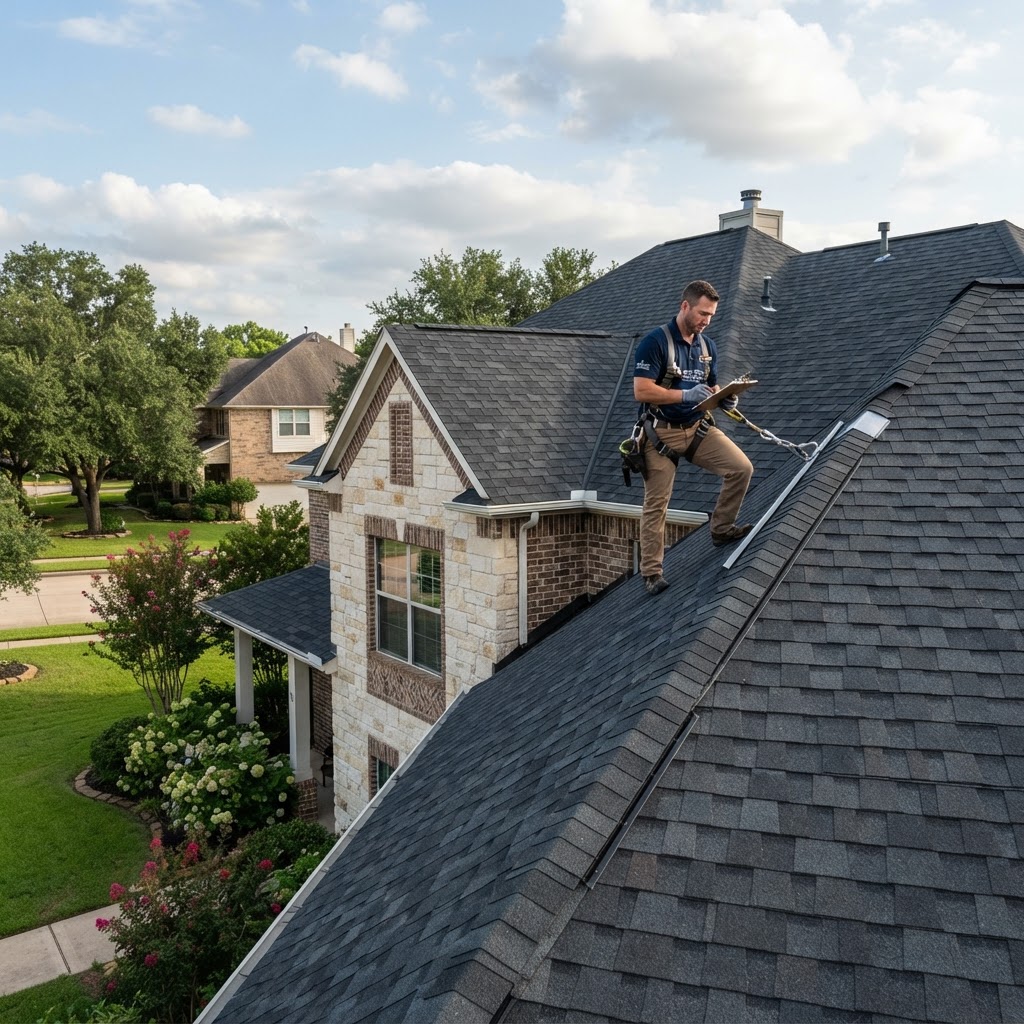
If you've worked through this checklist and found something that's outside your comfort level — a suspicious valley, a boot collar that looks cracked, flashing that doesn't look right — the team at FairClaims Roofing & Construction offers no-obligation roof assessments for Magnolia and Montgomery County homeowners. We'll give you an honest assessment of what needs attention now versus what can wait, with no pressure and no upselling.
Your next step: Set a 20-minute timer this Saturday morning, walk your perimeter, and open your attic hatch. That's it. What you find — or don't find — will tell you more about your roof's current condition than any article ever could.
Need a roof inspection?
FairClaims Roofing & Construction offers free inspections across the Texas Triangle.
Click to Call